2026 World Cup – Turning Point for Soccer?

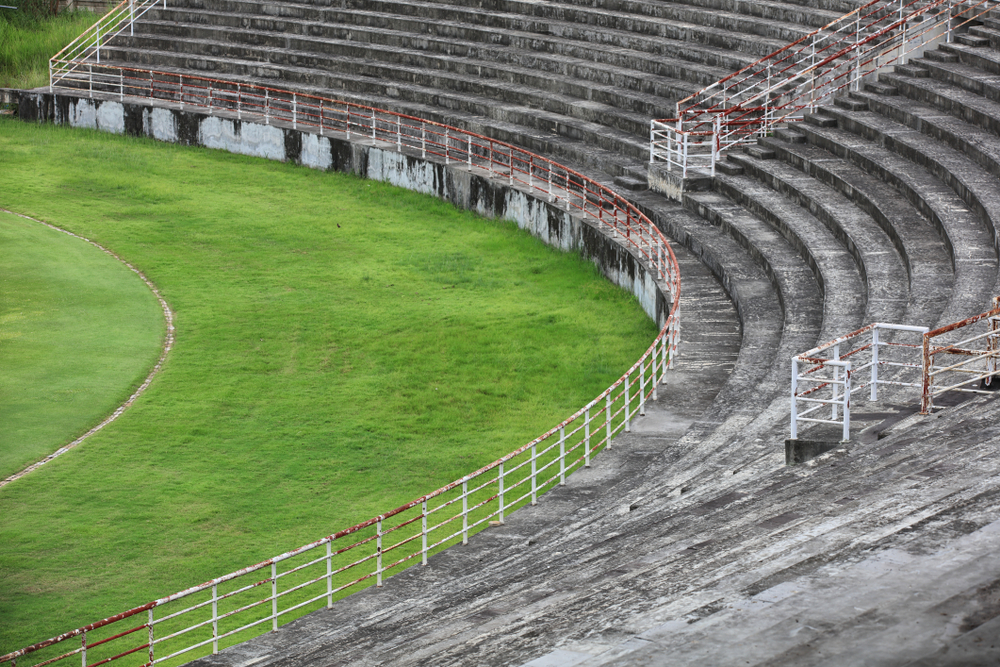
I remember one incident. I was a student and I was stuck in bed with a dreadful cold in the head that had rendered me physically weak and mentally incapable. I was in bed alone listening to classical music on the BBC’s Radio 3. In those days Radio 3 broadcast simultaneously on both long wave and FM frequencies, and was a good choice for my condition because it didn’t have annoying disc jockeys or adverts and usually played good music.
I was suffering stoically when disaster struck. The channel switched over to covering the cricket. Usually this would have been fine. I just had to return to the other frequency to carry on with the programme I had been listening to. But I was really ill and the effort of getting out of bed was forbidding. The sports coverage started, and I had a reprieve. The plummy-voiced presenters — that distinctive upper-class BBC accent of the era — announced that the weather was bad. By good luck rain had stopped play. I had been saved and the music would soon return.
Or so I thought.
But it turned out that plummy BBC presenters are not made of stern stuff. They didn’t let the mere absence of any cricket being played stand between them and their time on the microphone. They just kept up a continual annoying cod-eccentric burble, talking in a self-congratulatory tone about nonsense such as what cakes they had to eat, tedious anecdotes and making observations with operatic drama about what was happening with the groundsheet.
It was a hell nearly as bad as if there had been any actual cricket. But I was too ill to get up and retune.
As is no doubt obvious by now, I do not like cricket. I don’t understand the game itself. I cannot work out from a reported cricket score which team has actually won. There seem to be too many variables. The length of time that matches take is mind-boggling. I think the standard length of time is on the order of five days – an extraordinary investment in a game where from minute to minute very little appears to happen. A lot of data is generated over this period, but even so it is still possible for the match to end in a draw. This seems a very unsatisfying situation.
Fans of cricket seem unfazed by these obvious flaws in the sport, quite apart from it being the only sport so unstrenuous that its kit is basically normal clothes and whose most exciting moments are generally changing ends. They revel in its eccentricities and quaintness. The absurdity is often celebrated as being quintessentially English.
I am from Sussex and was led to believe growing up that cricket was first played in Sussex. I have since heard that other counties make the same claim. It might even be the case that all counties claim to have invented cricket. It would be a typical bit of ridiculousness. But how are we to know the truth?
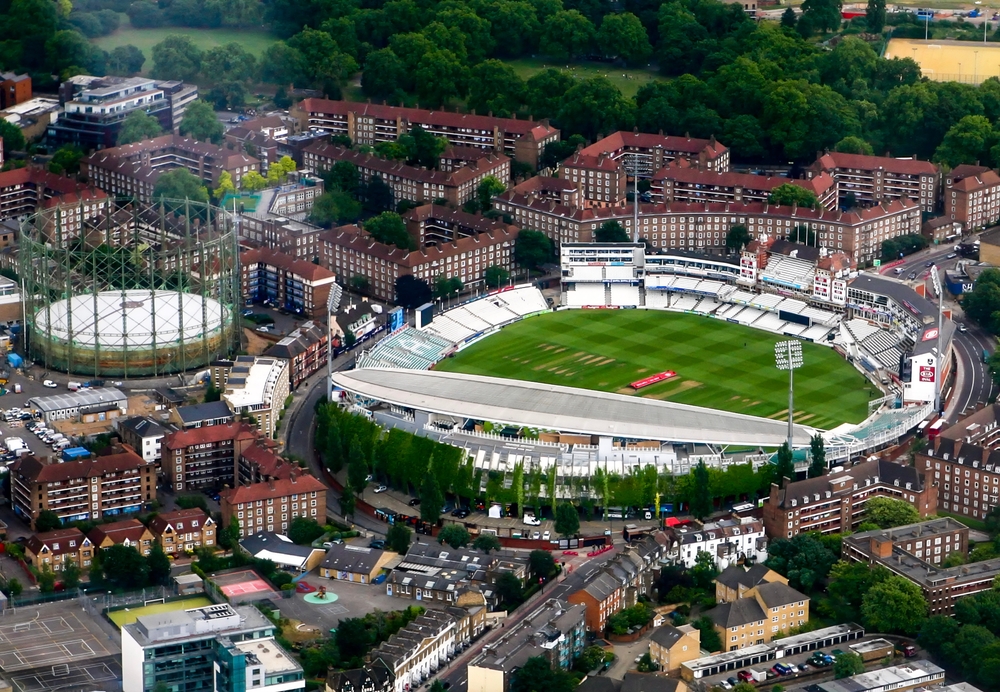
In fact we have a pretty good idea of the truth if we choose to look for it. Because far from being something created in villages, cricket is very much a creation of the industrial revolution and capitalism. It was created not by simple country folk but by a businessman and its home is the Oval, a cricket ground in south London. This was built on a piece of swampy land that had previously grown cabbages and needed a vast input of labour and the transporting of a huge quantity of turf from elsewhere. It was a massive project undertaken with the goal of turning a profit. The terraforming required to create the level pitch was an impressive example of Victorian engineering. But the most important part of the project is the wall and the turnstiles that limited the access to it to those who had paid.
It was the start of the commercialisation of sport. And in addition to the creation of the physical space, the marketing got started as well. Cricket was launched from day one with a brand image that required a back story. Obvious nonsense was spouted about the sport’s origins, and the eccentricity was built in from day one. Are we really meant to believe that there was a match between 11 Chelsea Pensioners — the red-coated military veterans of the Royal Hospital Chelsea — with teams comprising 11 men who had lost a leg against 11 men who had lost an arm?
The legend was curated carefully using the media of the time to attract as much attention as possible. Cricket became the first sport to go global with international fixtures between England and Australia. When England were beaten an entirely bogus stunt was played where fans were supposedly so upset they burnt the losing team’s cricket bats. The remains were stored in an urn that became the trophy for future matches — the Ashes, still contested between the two countries to this day. Mass manipulation of the media made money. Sport became a business.
I think that cricket was created from clean cloth and has no genuine history. There has never been a time when villages devoted five days at a stretch to a game whose tedium is so relentless that spectators regularly fall asleep. But humans do play games when they have spare time, and Britain does have an authentic national sport in the form of football. This is a genuinely exciting game, the rules of which can be picked up in a single session and where it is very obvious who has won and what skills are required.
Football appears in the historical record in the Middle Ages when kings banned it. It appears to have been pretty much a free-for-all with the ball being a repurposed pig’s gut. It became more organised over time as society as a whole did. The rules became somewhat more standardised as the industrial revolution was kicking off in the North of England with Lancashire hand loom weavers playing a big part. The continuing eminence of Manchester United as a fixture of football geography has deep roots.
The growing industrial working had increasing amounts of leisure time, which they devoted a fair bit to playing football and watching football. Unlike the Oval which was conceived from day one as a money-making venture, football clubs appeared spontaneously and matches between local clubs were a natural and obvious development. One club which is still in existence today is called Sheffield Wednesday because Wednesday afternoon used to be ‘early closing’ when shops would close at lunchtime. (I can still just about remember post offices still doing so when I was growing up.) Football was very much the sport created by and consumed by the ordinary people of Britain.
But Britain was (and is) a commercial society and commercial pressures could not be ignored. People started playing for money and playing professionally became a thing. Matching needs for regular income from ticket sales and finding a pleasing variety of opponents to play against led to the formation of the Football Association and the organisation of leagues.
For a long time this was just a normal part of British life, adapting to innovations such as radio and television. Fans could follow the game in great detail but everyone had some level of knowledge. The results were read out every Saturday evening on the television so you got to know the names of the clubs at least and have a good idea who was at the top of the league and who was at risk of relegation. It was a shared experience even if you never watched a match.
But things were changing. The influence of money was becoming greater and greater. This was most visible in the huge fees that were commanded by skilled players when they changed clubs. Records were continually being broken as football became bigger and bigger business. It was even part of its appeal. There were only 3 ways an ordinary person could become rich: playing politics, playing music or playing football. Playing football was the most relatable.
But the logic of money began to pervade the entire operation. Matches had been televised free to view. The fees charged by the Football Association were distributed back to the clubs. It was a fair system, but it didn’t reflect the market value of the audience nor the differences in costs of running a big club compared to a small one. Big ones needed to pay for big players to score the goals and pull in the crowds. Smaller ones struggled to cover the costs of their grounds. This became particularly onerous after the Hillsborough disaster of 1989, when 97 Liverpool fans were crushed to death in the standing-only sections of the stadium. The subsequent Taylor Report made it clear that the tradition of watching a match standing up, on the ‘terraces’, was a risk it was no longer permissible to take.
Basically UK football was both raking in the cash and running up bills. The solution was to become more commercial. As is often the case, a handful of clubs attracted most of the income. The answer was obvious. Spin off the top clubs into their own ‘Premier League’ — which duly happened in 1992. Use the new satellite TV infrastructure (Sky, in particular) to restrict access or make the fans pay directly to see their favourite teams. The top teams became serious business operations. Media companies acquired monopolies on broadcasting that locked in viewers. The most talented footballers could now command salaries that would comfortably exceed those of the combined incomes of a stadium full of their fans.
Businesses follow business logic and businesses need to grow. The UK market for football was already saturated. But now the matches could be broadcast world-wide. There were other customers up for grabs. Football as a game is a great product. Its rules are easy to grasp and it serves up great moments of excitement and drama.
One consequence of this is that great footballers can be found around the globe. There is worldwide competition for people with unusually high levels of skill with a ball. If you can win a match you can add a lot to your team’s value. But hiring foreign players also helps in promoting the club in the market where they come from.
All of which is a long way from Lancashire hand loom weavers organising some fun for a Saturday afternoon. It’s not even recognisable as the same game whose results I used to listen to on the television in the sixties during the Saturday teatime ritual of waiting for Doctor Who to start. There hasn’t been much protest about a big chunk of British culture being appropriated by business interests. But there is a slow backlash just visible. A recent attempt to create a European super league comprising the top eleven clubs on the continent and Tottenham Hotspur was abandoned when it became clear that none of the fans wanted it.
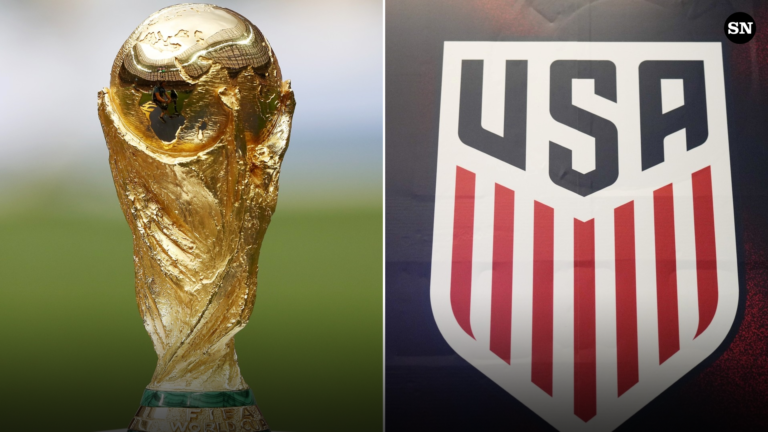
But the real effect of decades of relentless commercialisation of football is beginning to become clear with this year’s World Cup. This is being played in the USA. Given that the US is one of the few countries where football is not popular, this is a very curious choice. Until you remember it is probably the most lucrative sports market. So this is a great opportunity to win over customers.
If this is the plan, and this is the plan, it isn’t yet working out very well. Flight and hotel bookings are well below expectations. Reports suggest that fans in New Jersey will be charged $150 for the train ride between Penn Station and MetLife Stadium — more than ten times the usual fare — and similar gouging is being reported across host cities. Politics is a factor — the current US president is not popular abroad — but a football fan should be made of sterner stuff. The softness runs deeper than that.
What we may be watching is football beginning to look like cricket. A game that started as something ordinary people did on a Saturday afternoon, gradually re-engineered into a product to be sold back to them — and then sold beyond them, to audiences who have no inherited stake in it at all. The Lancashire weavers organising a kickabout, the Sheffield shopkeepers closing up early on a Wednesday, the Saturday teatime ritual of the football results before Doctor Who: none of that connects in any meaningful way to a tournament staged in a country that doesn’t much care about the sport, in order to extract revenue from a market that has yet to be persuaded it should. The collapse of the European Super League proposal showed that fans can still tell the difference between a game and an asset class. The lukewarm reception to this World Cup suggests they are starting to act on it. There is a limit to how far you can squeeze cash out of the basic human desire to enjoy sport. Football has reached that limit.