Trump’s Worst Impact on the US

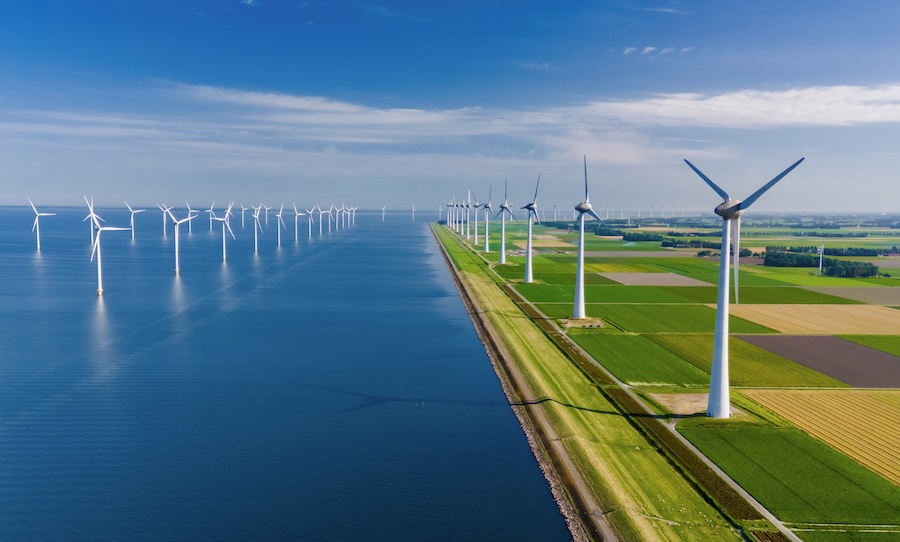
There have been some YouTube videos attracting attention recently which propose that all great empires fall for financial reasons. The idea is that when you’ve got the largest military it gives you the opportunity to borrow lots of money. Your power makes you very credit worthy so everyone wants to put their savings with you given that you are clearly more capable of looking after it.
This has the effect of making it very easy to raise loans. Empires are as likely as anyone else to find the lure of cheap and easy credit irresistible. In the end the empire becomes so indebted that its bubble bursts and the empire runs out of money, declines and falls.
Examples given of this process are typically Rome, Spain, France, Britain and sometimes the Soviet Union. And the scary bit is that the USA appears to be at the bubble about to burst stage of the process.
I say scary. As a Brit and a fairly old one who still remembers maps on schoolroom walls where we seemed to be in charge of lots of interesting places, this analysis does have an appealing angle. Britain’s empire certainly did fall when the UK ran out of cash and needed to be bailed out by the US. It’s quite a nice idea that this was an inevitable process rather than poor judgement on our part. And even though it isn’t remotely in the UK’s interests for the US to be replaced as the global hegemon – given that they were the guys that took over from us it wouldn’t be entirely unsatisfying.
But is this idea that money is the root of all politics and that finance is the ultimate source of power really true? It doesn’t seem very likely to me. I think this is one of those cases where it is easy to mix up cause and effect. There have always been empires. The biggest was the Mongol one. This was clearly based on simple but effective brute force. The Mongols were very good horsemen and very good shots. The reason it isn’t around any more was that it didn’t keep up with newer technologies that improved the amount of power, in the sense that physicists mean it, to other humans.
While money sounds like it is the thing that is driving events, the reality is that it is really efficiency of utilising energy that really determines the relative strength of human societies. We remember Genghis Khan not because he had lots of treasure but as a result of his horsemanship at his ability to write optimum use of horsepower was the key technology.
This was also the secret of the Arab conquests that finished off the Persian empire and fatally weakened the Roman one. Their effective use of horse power fuelled their expansion for centuries inducing well deserved fear in Europe, at the time a pitiful backwater. The reason that London and Paris were able to breath again was largely due to the expansion of water and wind technology. One of the oldest companies in the world is a French dam company whose business was exploiting a river to improve drainage for crops and motive power for milling. The use of windmills seems quaint and romantic to us nowadays. But it was a key reason that Europe started to slowly overtake the hitherto more advanced middle east region. They did a lot more than just confuse Don Quixote. Improved agriculture created the surplus that enabled Europe to develop technologies that would include the production of more and better arms.
Wind power of course also revolutionised sea travel enabling Europeans to project force much widely. Small but wealthy territories like Portugal and Holland became world players.
England and Spain were not quite as quick of the mark as Holland and Portugal. But both were able to use wind power to gain territory outside Europe and were soon using the building empires. This was spectacularly so in the case of Spain which created the first global empire. Its impact is still felt today. The influence of European countries over the globe was not at all proportional to the size and resources of their home bases. It was purely down to their efficient use of the power of the wind.
The ultimately most successful country in the global empire game was an unlikely one. In purely European terms England was a cold and wet offshore island without any special advantages. But it had a trick up its sleeve. It happened to have abundant coal. This created the next revolution in power usage. It was this that enabled it to overtake its neighbours in what became the race to dominate the rest of the planet. By the end of the nineteenth century Britain’s navy was steam powered and ruled not only the waves but a network of coaling stations that gave it a unique strategic global advantage.
Britain’s empire at its peak was the largest ever in terms of land area and population. Even so it had one short-coming, despite it being famously “an empire on which the sun never set”. But permanent illumination couldn’t overcome one curious twist of geographical fate. It had virtually no substantial oil reserves.

This, it turned out, was a big deal. When Winston Churchill made the necessary switch of fuel for the Royal Navy from coal to oil the empire was suddenly dependent on an external source of power.
Britain entered the twentieth century as the undisputed global hegemon. It left it without even control over of the entire land mass of the British Isles. The last significant possession, Hong Kong, was handed back to the Chinese in 1997.
The two states that displaced Britain were the US and the USSR. Both were blessed with very adequate reserves of oil. Ultimately, military, political and financial power all rest on actual power that can be measured in watts. It might have been possible for the British to get a hold of sufficient oil to keep the show on the road. But they would have needed to have made all the right strategic decisions while hoping for unforced errors by the Americans and the Soviets. Things didn’t work out that way. The key event that sunk the empire in the event was an attempt to get better access to oil supplies by seizing control of the Suez canal. Both the Americans and the Russians took steps to thwart the project.
We are at a bit of turning point in energy at the moment. Oil would be losing ground to other sources anyway as wind, solar and nuclear become steadily cheaper. But the environmental issues with fossil fuels are so manifest that even politicians find them difficult to ignore. There are some geographical considerations with renewables, but they aren’t as stark as was the case with coal and oil. Every region has an adequate supply of wind and sun. The issue is much more one of strategic approaches and effective strategies.
So what does this mean for the coming era? It won’t be long before electric tanks outperform diesel and petrol ones. Warplanes already share their area of operation with electric powered drones, at least at lower altitudes. I don’t have the expertise to predict the details, but there can be no doubt that conflict in the relatively near future will be revolutionised at least as much by the switch to renewable energy as it was by the arrival of the steam and petrol engines that dwarfed the motive power of horses. There’s also the use of AI to consider – and AI requires prodigious quantities of power. The positioning and capacity of power generation could well be as critical to strategy as the position of depth of ports is currently.
The countries that take most effective advantage of these changes will be the winners of the 21st Century. Only a mug punter would place a bet on any of the horses at this stage. But the front-runners at this stage have to be China and the United States.
Right now, it has to be said that the US seems to be doing it wrong and China is doing it right. President Trump is not showing any awareness of the need to modernise energy production and is undermining progress in this direction. Programmes developing renewable energy are even being cancelled. There is so much that Trump is doing that is controversial that this particular policy is not getting the amount of attention that it deserves. But of all the things he has put a finger into, this seems to me to be the one that is most consequential and the one that is worst for the long term interests of America.
I’m not talking here about the effect on climate change. As it happens, that is likely to be disastrous as well. But even if the greens and the scientists are wrong about the effects on the planet and the fossil fuel lobby are right – if renewables continue their current path and become across the board more efficient than burning dead trees then the countries with the best technology will be the winners.
China has already established a strong position in electric vehicles. This is turning into a disaster for the European car industry. America is still in the race, but mainly in the form of Tesla. This seems a solid enough prospect at the moment, but has a couple of questionable aspects. It is operating in China, so furthering the technological development of the chief rival. And its CEO is bonkers. He currently seems to have his mind on all sorts of other projects rather than focusing on battery technology and power generation.
It is hard to imagine a more harmful policy for the future strength of the United States than Trump’s attack on research and promotion of the burning of fossil fuels. But the lack of any policy to strategically position the US to a new environment for power generation might be it. To be sure, he’s doing a lot of other stuff that is grabbing attention and which people naturally disapprove of. But there is no inherent reason why an authoritarian and undemocratic United States shouldn’t also be powerful and influential.
But it won’t be either on its current trajectory.